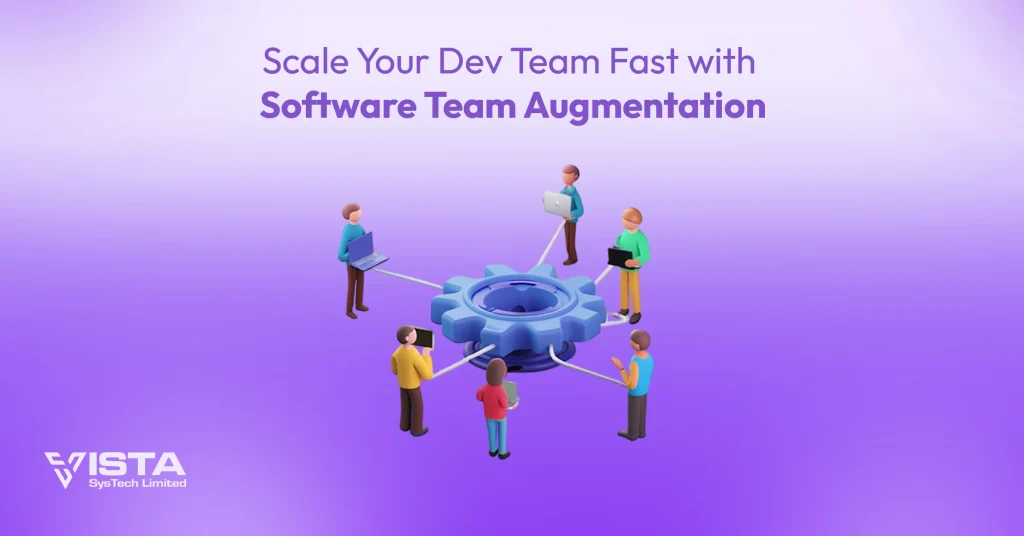
Scale Your Dev Team Fast with Software Team Augmentation
The global software development market will reach $1.3 trillion by 2025, creating unprecedented demand for development talent. Software team augmentation has emerged as the strategic solution, enabling businesses to scale technical capabilities without the overhead of traditional hiring.
This model allows organizations to hire skilled developers on demand, integrating external expertise directly into existing teams. With 78% of businesses reporting positive outcomes from augmentation strategies, understanding this approach is essential for competitive advantage in 2025.
Whether you’re scaling a startup or managing enterprise projects, this comprehensive guide provides actionable strategies for implementing successful team augmentation.
What is Software Team Augmentation?
Software team augmentation is a flexible staffing model where businesses hire external developers to supplement in-house teams temporarily. Unlike traditional outsourcing that transfers entire projects to vendors, augmentation maintains your direct control while adding specialized expertise.
The model functions as a strategic extension of your existing team. External professionals integrate into your workflows, use your tools, and follow your processes while bringing specialized skills your current team may lack. This approach bridges talent gaps without long-term hiring commitments.
Think of it as having an on-demand talent reservoir—you scale up for major initiatives and scale down during slower periods, paying only for the expertise you actively use.
7 Strategic Benefits of Software Team Augmentation
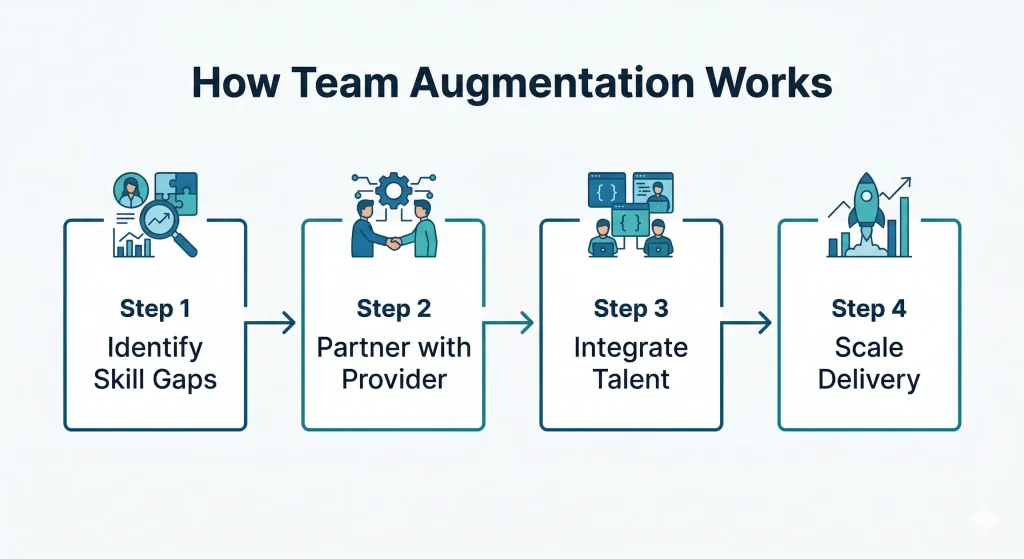
1. Global Talent Access Without Geographic Limits
Geographic boundaries no longer constrain your hiring. Need a React specialist in Eastern Europe, ML expert in India, or DevOps engineer in Latin America? Augmentation connects you with global talent pools, providing access to niche expertise rarely available locally.
This geographical flexibility expands your options exponentially, letting you source professionals with specialized skill sets while benefiting from regional cost advantages.
2. Cost Reduction of 30-50% Versus Traditional Hiring
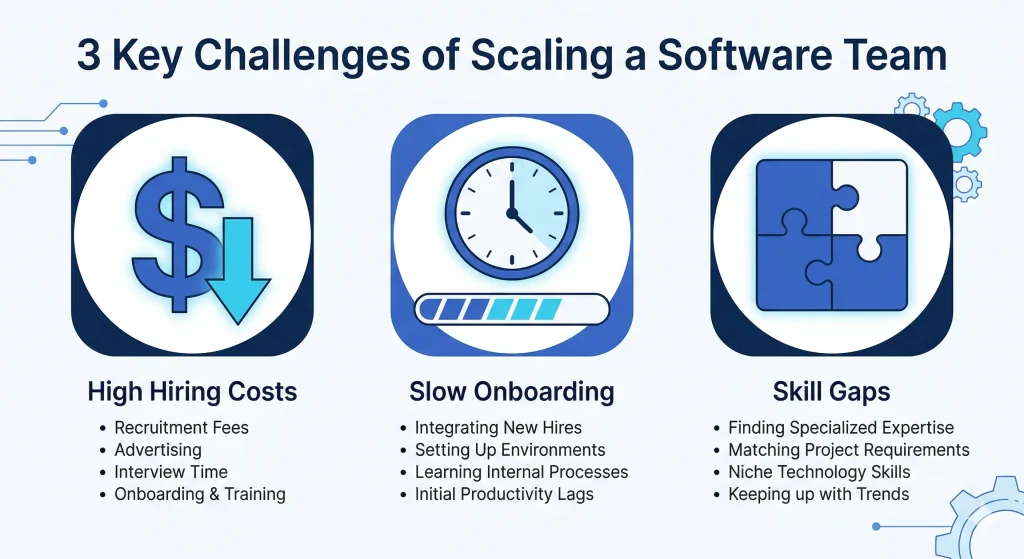
Traditional hiring carries substantial hidden expenses: recruitment fees, benefits packages, office infrastructure, equipment, training programs, and ongoing overhead. The augmentation model eliminates most of these costs.
You pay only for the expertise you need, for precisely the duration required. Most organizations achieve 30-50% savings on development costs while maintaining—or improving—output quality through this approach.
3. Unmatched Scalability and Flexibility
Business requirements fluctuate constantly. You might need 10 developers for a product launch, then scale to three for maintenance. Software team augmentation provides this elasticity without complex hiring and termination processes.
Adjust team size based on project requirements, market conditions, or strategic shifts—particularly valuable for seasonal demand patterns or rapidly evolving markets.
4. Accelerated Time-to-Market
Traditional recruitment spans 3-6 months from posting to onboarding. Augmentation delivers qualified professionals within days or weeks—critical when launching products, responding to competitive pressures, or capitalizing on market opportunities.
This speed advantage often determines market leadership in competitive industries where timing is everything.
5. Immediate Access to Specialized Skills
Technology evolves continuously. Maintaining in-house expertise across every emerging technology is impractical. Augmentation provides on-demand access to specialists in AI/ML, blockchain, cloud-native architecture, and other specialized domains without training investments or long-term commitments.
6. Eliminated Training Overhead
Augmented professionals arrive as field experts, requiring minimal ramp-up time. They contribute meaningfully from day one while bringing best practices and fresh perspectives from diverse project experience across multiple industries.
7. Built-In Risk Mitigation
Employee turnover can devastate projects. Augmentation provides built-in redundancy through backup resources and transition protocols, ensuring project continuity and significantly reducing personnel change risks.
Ready to Scale Your Development Team?
Discover how top companies implement successful augmentation strategies. [Contact our experts] to assess your team’s scaling needs and explore customized solutions.
How Software Team Augmentation Works: 5-Step Process
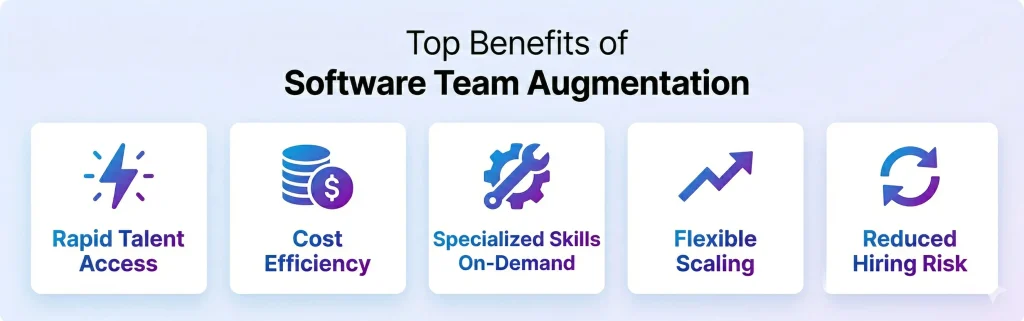
Understanding the operational mechanics ensures you leverage this model effectively:
Step 1: Define Precise Requirements
Clearly articulate your needs: technical skills (programming languages, frameworks, tools), soft skills (communication, problem-solving), project duration, time zone alignment, and cultural compatibility. Specificity improves matching quality.
Create detailed role descriptions outlining technical requirements, expected outcomes, and success metrics rather than generic skill lists.
Step 2: Select Reputable Partners and Screen Candidates
Choose augmentation providers with proven expertise in your technology stack. Reputable partners like Vista Systech Limited handle initial screening—vetting candidates for technical proficiency, communication skills, and professional background—presenting pre-qualified matches that save countless screening hours.
Step 3: Conduct Technical Validation
Even with pre-screened candidates, perform your own technical interviews and assessments. Ensure developers possess required skills and align with your team’s working style, communication preferences, and project expectations. Practical coding challenges or pair programming sessions evaluate real-world problem-solving capabilities effectively.
Step 4: Integrate Seamlessly
Integrate selected team members into existing workflows: grant tool access, repository permissions, and communication channel entry. Provide comprehensive context on your product, business objectives, and team dynamics. Treat augmented developers as full team members, not external contractors—this mindset proves crucial for success.
Step 5: Manage and Collaborate Continuously
Your augmented team operates under direct supervision, following your processes, attending meetings, and using project management tools. You maintain complete control over assignments, priorities, and deliverables. Regular communication, clear expectations, and consistent feedback ensure alignment and productivity.
Team Augmentation vs. Alternative Staffing Models
Understanding model differences helps select the optimal approach:
Augmentation vs. Traditional Outsourcing
Traditional outsourcing transfers entire projects to external vendors managing work independently. You provide requirements and receive deliverables with limited day-to-day involvement.
In contrast, augmentation keeps you in control. You direct workflow, make decisions, and maintain direct developer communication. This approach excels when maintaining intellectual property, retaining institutional knowledge, or requiring tight existing system integration.
Augmentation vs. Freelance Platforms
While platforms like Upwork and Toptal connect you with individual contractors, augmentation provides managed services. You receive vetted professionals backed by organizations handling administrative tasks, ensuring availability, providing backup resources, and managing quality.
Freelancers offer flexibility but carry reliability risks. Augmentation combines flexibility with professional accountability and organizational support.
Augmentation vs. Permanent Employment
Permanent employees provide stability and deep institutional knowledge but incur fixed costs regardless of workload fluctuations. Augmentation offers variable capacity—scale up for major initiatives, scale down during slower periods.
Use permanent hires for core functions and long-term strategic roles. Deploy augmentation for specialized needs, temporary workload spikes, or skills needed occasionally rather than continuously.
When to Use Software Team Augmentation
Augmentation excels in specific scenarios:
• Rapid growth requiring quick development capacity scaling
• Projects demanding specialized skills your current team lacks
• Team capacity maxed but permanent hires unjustifiable
• Aggressive deadlines requiring quality maintenance
• Testing new technologies or markets without major commitments
• Budget constraints preventing permanent workforce expansion
• Temporary gaps from employee leave or turnover
5 Best Practices for Successful Implementation
1. Establish Clear Communication Protocols
Communication breakdowns cause most augmentation failures. Establish explicit protocols for meetings, status updates, code reviews, and escalations. Use collaboration tools like Slack, Jira, and GitHub maintaining transparency and alignment.
Schedule regular check-ins without micromanagement. Document decisions and discussions creating shared knowledge bases accessible to all team members.
2. Integrate Augmented Members Into Your Culture
Treat augmented team members as full colleagues, not outsiders. Include them in team meetings, social events, and decision-making processes. This inclusion fosters engagement, improves collaboration, and drives better outcomes.
Cultural integration requires extra effort with remote or offshore teams, but the productivity and retention investment pays significant dividends.
3. Set Clear Expectations and Success Metrics
Define success criteria upfront: What constitutes good performance? What are key deliverables? What quality standards apply? Establish measurable KPIs aligning with business objectives. Regular performance reviews and feedback sessions ensure alignment and prompt issue resolution.
4. Invest in Comprehensive Documentation
Documentation accelerates onboarding and reduces confusion. Document architecture, coding standards, workflows, and business logic. This upfront investment pays exponentially as team members ramp faster and maintain reliable references.
5. Address Time Zone Challenges Proactively
With offshore teams, don’t let time zones become obstacles. Identify overlapping hours for real-time collaboration. Use asynchronous communication effectively—detailed ticket descriptions, recorded video updates, comprehensive code comments enable progress regardless of online timing. Consider rotating meeting times sharing odd-hour call burden fairly.
Need Help Implementing These Strategies?
Our team specializes in building high-performing augmented development teams. [Schedule a consultation] to discuss your specific requirements and explore how we can support your growth objectives.
Common Challenges and Proven Solutions
Managing Remote Collaboration Effectively
Remote work requires intentional relationship-building and alignment maintenance. Combat this with regular video calls, virtual team-building activities, and clear communication norms. Tools like Zoom for face-to-face interaction and Miro for collaborative brainstorming bridge physical distance effectively.
Ensuring Knowledge Transfer
When augmented developers transition to other projects, their knowledge must remain. Implement systematic transfer practices: pair programming with permanent staff, comprehensive code documentation, recorded system walkthroughs, and overlapping transition periods when changing members.
Maintaining Consistent Code Quality
With team members from diverse backgrounds, consistent code quality requires explicit standards. Implement automated testing, code review processes, linting tools, and CI/CD pipelines enforcing quality gates. Make standards visible and accessible through documented style guides, coding conventions, and architectural principles everyone follows.
Protecting Intellectual Property
Security concerns are valid with external developers. Mitigate risks through comprehensive NDAs, clear IP ownership contract clauses, access controls, and security audits. Work with reputable partners maintaining proven security track records and complying with regulations like GDPR or SOC 2.
Cost Analysis: Understanding Augmentation Pricing
Understanding financial aspects enables informed augmentation decisions:
Standard Pricing Models
Most providers charge hourly or monthly rates. Hourly rates typically range from $25-$150 depending on skill level, location, and specialization. Monthly retainers offer predictability and often include volume discounts. Some providers offer flexible models with hour blocks or minimum monthly allocations.
Hidden Costs to Consider
While augmentation saves money overall, account for onboarding time, communication overhead, and integration efforts. Budget for remote collaboration tools and infrastructure. Factor in team coordination and management time. These costs remain minimal compared to traditional hiring but shouldn’t be ignored in planning.
Calculating Return on Investment
Measure augmentation ROI by comparing total costs (rates + overhead) against alternatives (permanent hire costs or delayed project launch). Consider time-to-market advantages, opportunity costs of delayed features, and competitive positioning. Most companies find even with higher hourly rates, flexibility and speed advantages deliver substantial ROI.
Future Trends Shaping Software Team Augmentation
The augmentation landscape continues evolving with several key trends:
AI-Enhanced Talent Matching
Artificial intelligence is revolutionizing company-developer matching. Advanced algorithms analyze technical skills, project history, communication styles, and cultural fit suggesting optimal team compositions. This technology reduces matching time and improves success rates.
Specialized Niche Expertise
As technologies specialize, demand grows for hyper-specific expertise—blockchain developers, ML ops engineers, quantum computing specialists. Providers are building deeper specializations meeting these niche demands, moving beyond generalist developer pools.
Hybrid Engagement Models
Companies increasingly blend augmentation with other models—combining augmented developers with managed services, mixing onshore and offshore teams, or transitioning successful augmented members to permanent roles. This flexibility creates customized engagement models optimized for specific situations.
Focus on Developer Experience
Leading providers prioritize developer satisfaction and career growth. Happy developers produce better work and stay longer. Expect increasing emphasis on continuous learning opportunities, career development paths, and meaningful engagement for augmented team members.
Getting Started: Your Implementation Roadmap
Ready to implement software team augmentation? Follow this action plan:
Step 1: Assess Current Capacity and Needs
Evaluate your existing team’s capabilities, current workload, and upcoming projects. Identify specific skill gaps, capacity constraints, or knowledge areas where external expertise adds value. Be honest about internal capabilities versus external support requirements.
Step 2: Define Your Augmentation Strategy
Determine whether you need short-term project support, long-term capacity expansion, or specialized expertise for specific initiatives. Consider budget constraints, timeline pressures, and strategic priorities. Create a clear success picture—what will augmentation help achieve?
Step 3: Research and Vet Potential Partners
Don’t settle for first-found providers. Research multiple options, check references, review case studies, and assess technology stack expertise. Look for strong communication practices, transparent processes, and proven industry track records.
Step 4: Start with a Pilot Project
Before large-scale commitments, run a pilot. Choose well-defined projects with clear success criteria. This trial period lets you evaluate providers, test processes, and build confidence before scaling. Use pilot insights to refine approaches.
Step 5: Scale Based on Results
If your pilot succeeds, gradually expand your augmented team. Apply initial engagement lessons. Continue refining processes, communication protocols, and integration practices. As you gain experience, you’ll develop organization-specific best practices.
Conclusion: Embracing Software Team Augmentation
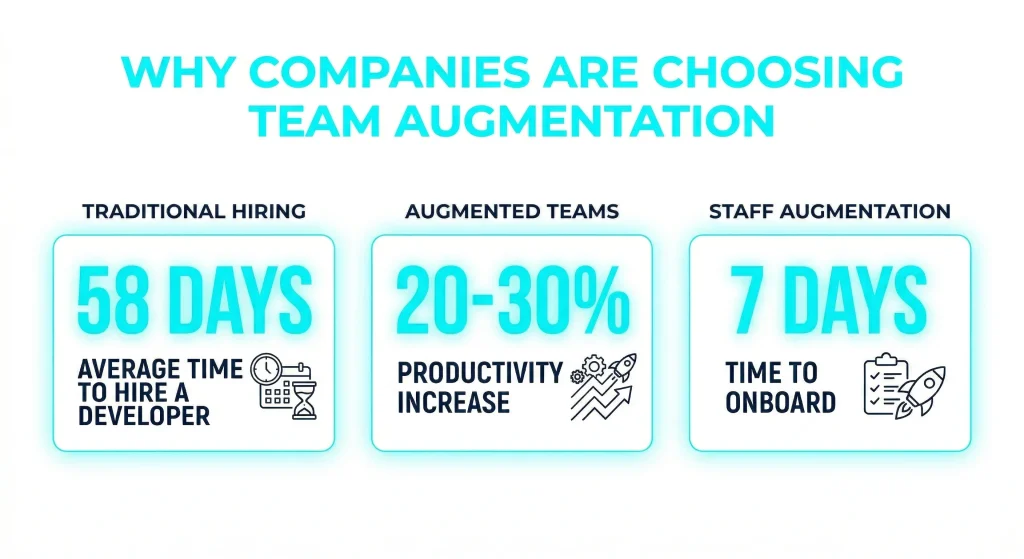
Software team augmentation represents more than a hiring strategy—it’s a fundamental shift in how modern companies build and scale technical capabilities. In an era where agility, speed, and specialized expertise determine competitive advantage, this model provides flexibility to adapt quickly while controlling costs and maintaining quality.
The traditional model of large, permanent in-house teams is giving way to dynamic, hybrid approaches. Companies mastering augmentation gain significant advantages: accelerated time-to-market, global talent pool access, cost optimization, and the capability to tackle previously impossible projects.
Success requires intentional effort—clear communication, cultural integration, comprehensive documentation, and strategic partner selection. But for companies willing to invest in these practices, returns prove substantial. You gain not just additional capacity, but fresh perspectives, specialized expertise, and flexibility to navigate an uncertain future.
Whether you’re a startup scaling rapidly, an enterprise managing complex initiatives, or anything between, software team augmentation deserves serious consideration. The question isn’t whether to explore this model, but how to implement it effectively for your specific context.
Start small, learn continuously, and scale strategically. The future of software development is flexible, global, and collaborative—and team augmentation is your gateway to that future.
Have a project like this?
We help teams turn ideas like the one above into shipped, dependable software. Let’s talk.
Start a project