Every modern enterprise faces a pivotal question: settle for generic off-the-shelf tools, or invest in software purpose-built for your operations? For a growing number of organizations, the answer is B2B custom software development, partnering with a specialized firm that designs, builds, and deploys software tailored to your workflows and strategic goals.
The numbers back this shift. According to a custom software development market analysis by Grand View Research, the global market was valued at USD 43.16 billion in 2024 and is projected to reach USD 146.18 billion by 2030, growing at a CAGR of 22.6%. Whether you run a healthcare startup, a logistics empire, or a fintech venture, having software that mirrors your exact processes is no longer optional; it is a competitive necessity.
This guide explores the benefits, development process, top industries, and common challenges you should prepare for.
What Is B2B Custom Software Development?
B2B custom software development refers to the practice of one company building bespoke software for another. Unlike consumer apps, the focus is on solving complex operational problems such as supply chain management, enterprise resource planning, and inter-departmental data synchronization. The product is engineered from scratch to align with the client’s existing infrastructure, compliance needs, and growth strategy.
The process involves detailed requirements analysis, UI/UX design, iterative development sprints, rigorous quality assurance, and post-launch maintenance. Every decision is made to serve the client’s specific objectives rather than a broad consumer audience.
Key Benefits of B2B Custom Software Development
Long-Term Cost Efficiency
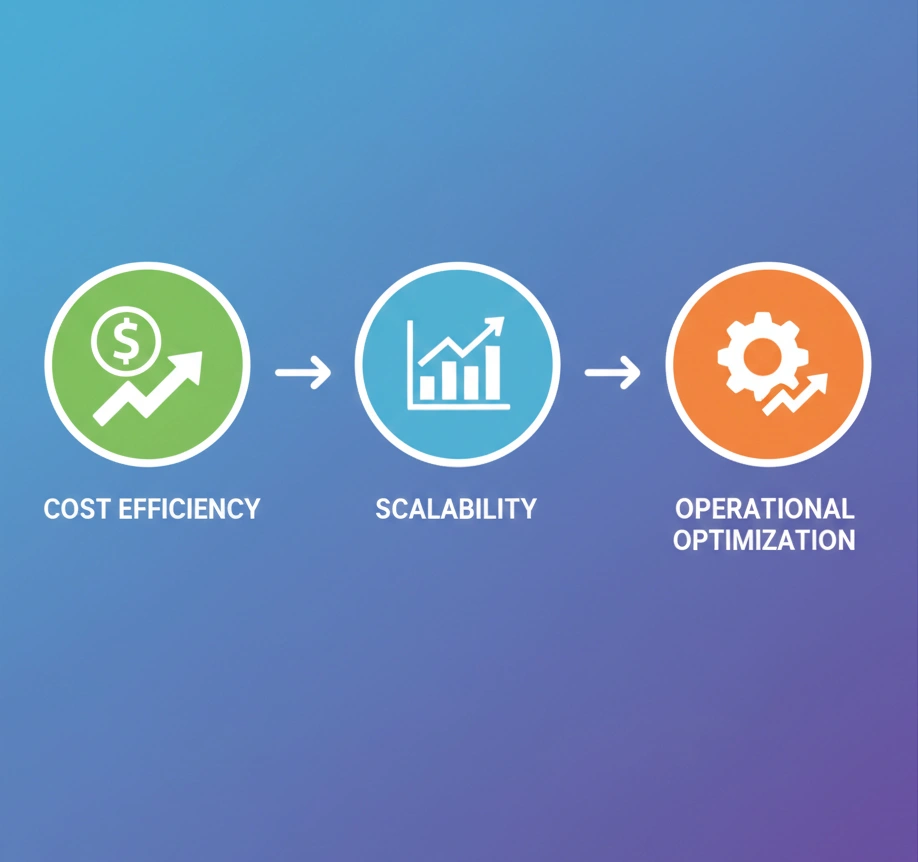
Off-the-shelf tools charge recurring licence fees and premium add-on prices that compound over years. A recent custom software development cost survey by GoodFirms found that nearly 66% of companies spend between $30,000 and $100,000 on their projects. B2B custom software development eliminates ongoing subscription costs. After the initial investment, you own the product outright and pay only for enhancements you actually need.
Seamless Scalability
Custom software is architected with your growth trajectory in mind. As your company expands, the software scales with you instead of forcing a costly migration to a higher SaaS tier.
Competitive Differentiation
When every competitor uses the same CRM, no one has an operational edge. Custom software gives you proprietary capabilities that rivals cannot replicate, from unique analytics dashboards to automated workflows.
Stronger Data Security
Mass-market platforms are attractive cyberattack targets. With custom software, your access controls, encryption, and authentication layers are configured specifically for your environment, significantly reducing your attack surface.
Custom solutions also integrate natively with your current stack, eliminating clunky middleware. Learn how modern custom web application services can unify your disparate platforms into a single, cohesive ecosystem.
The B2B Custom Software Development Process
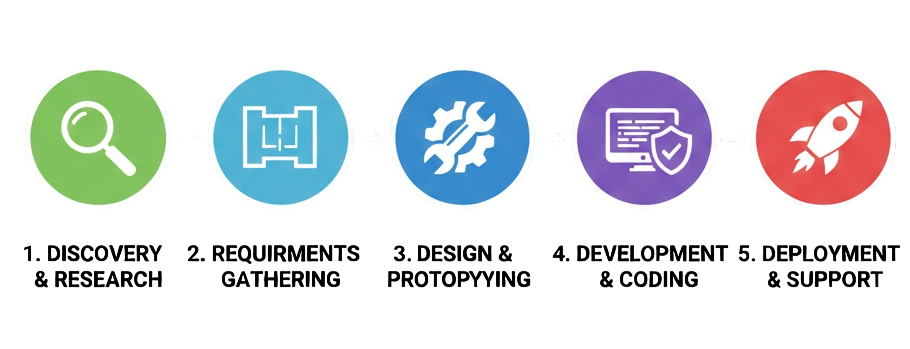
Understanding the lifecycle helps you set realistic expectations. Here is an overview.
Discovery and Requirements Gathering
Your development partner conducts stakeholder interviews, workflow audits, and competitive benchmarking to define clear requirements and SMART goals.
Design, Architecture, and Development
The team creates wireframes, selects the technology stack, and writes code in iterative agile sprints. Each sprint delivers a functional increment, keeping the project transparent. According to a software development pricing guide published by Clutch, the average project timeline is about 13 months, though agile methods can accelerate delivery considerably.
Testing and Deployment
Rigorous QA, including unit tests, integration tests, and security audits, ensures the software meets every specification. After deployment, user acceptance testing validates the system before it goes live.
Ongoing Maintenance
Software is never finished. Bug fixes, performance optimizations, and security patches keep your application running at peak performance long after launch.
Industries That Benefit Most
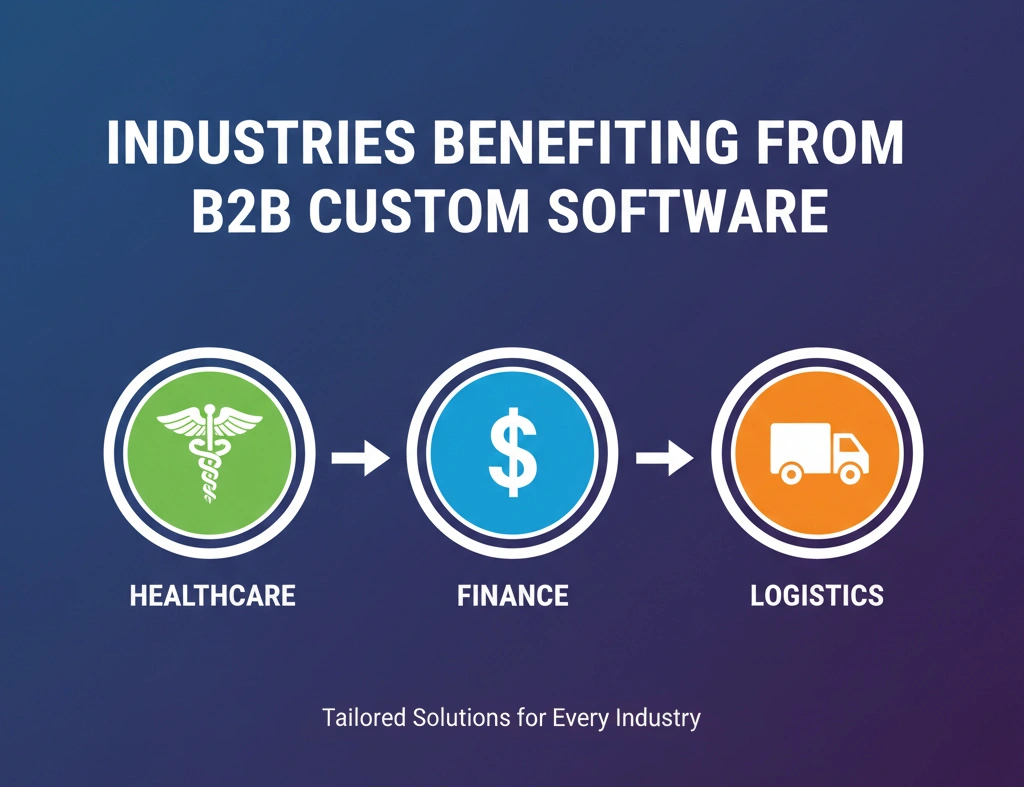
Healthcare providers use custom EHR systems and telemedicine platforms to unify data silos and improve patient outcomes. Financial institutions rely on B2B custom software development for trading engines, mobile banking, and fraud detection that meet stringent regulations. A software development statistics report by Keyhole Software notes that custom development is growing at a 22.6% CAGR, driven largely by demand from the BFSI and healthcare verticals.
E-commerce companies deploy inventory management, dynamic pricing, and personalized recommendation systems. Logistics firms leverage route optimization and warehouse management software, while manufacturers streamline production scheduling to respond quickly to shifting demand.
Common Challenges and How to Overcome Them
Scope creep is a frequent challenge. As new requirements emerge, timelines and budgets can balloon. The remedy is disciplined change management where every feature request is evaluated against defined priorities.
Data migration and integration complexity also pose risks. Choosing a team experienced in cloud migration strategies minimizes these issues considerably. Additionally, investing in employee training and phased rollouts ensures smooth organizational adoption.
Future Trends Shaping B2B Custom Software Development
Artificial intelligence and machine learning are being embedded into enterprise applications, enabling predictive analytics and intelligent automation. Discover how AI and machine learning solutions can transform your operations and give you a decisive competitive edge.
Cloud-native development with containers and microservices has become standard, enabling faster time-to-market and near-infinite scalability. A Mordor Intelligence industry report estimates the market will reach USD 115.95 billion by 2031 at a 17.88% CAGR, driven by cloud-native and AI adoption. The Internet of Things also continues to expand enterprise software boundaries, with sensors generating data that custom platforms can analyze in real time. Companies that embrace these trends through B2B custom software development position themselves well ahead of competitors relying on rigid, outdated systems.
How to Get Started
Begin with an honest internal assessment. Identify processes that slow your team down, data gaps that hinder decisions, and customer pain points that hurt retention. This clarity forms the foundation of your project requirements.
Next, evaluate potential partners carefully. Look for a proven portfolio, verified testimonials, and transparent communication. Vista Systech Limited combines deep technical expertise with an agile, client-centric approach to deliver custom software that solves real business problems. From initial discovery through post-launch support, the focus is always on measurable outcomes.
Once you select a partner, invest time in the discovery phase. Detailed requirements gathering prevents costly rework later. Establish clear milestones and acceptance criteria before a single line of code is written.
Final Thoughts
B2B custom software development is not a luxury reserved for large enterprises. It is a strategic investment that businesses of every size can leverage to operate more efficiently and scale more confidently. By choosing a reliable development partner, you can turn operational challenges into proprietary technological advantages.
Whether you need a robust enterprise software platform, a mobile application, or an intelligent data engine, custom software is the path to sustainable growth. Get in touch today to start the conversation.